In plastic injection molding, mold design directly affects product quality, production efficiency, and manufacturing cost. Even a small problem in material flow or cooling performance can lead to defects such as warpage, sink marks, weld lines, or short shots. Because of this, manufacturers increasingly rely on mold flow analysis to improve mold design before production begins.
By using simulation software to study how molten plastic behaves inside the mold cavity, engineers can identify potential issues early and optimize the injection molding process more effectively. This not only reduces tooling risks but also improves the consistency and quality of injection molded parts.
Mold flow analysis is a computer-aided engineering process used to simulate how molten plastic flows through a mold during
injection molding
. Specialized software evaluates material flow, pressure, temperature distribution, cooling behavior, and filling patterns before the mold is physically manufactured.
Through mold flow simulation, engineers can analyze important factors such as:
Instead of relying only on trial-and-error methods, manufacturers can use real data to improve both part design and mold engineering.
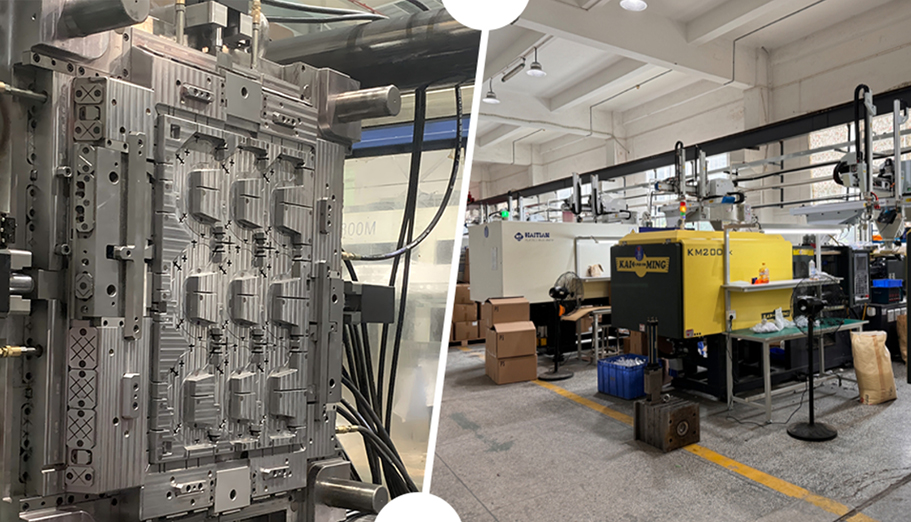
Before a mold enters production, design errors can still be corrected at a relatively low cost. However, once tooling production starts, changes become more expensive and time-consuming. For this reason, mold flow analysis plays an important role during the early design stage.
More importantly, the simulation process helps engineers predict issues that may not be visible in CAD drawings alone. For example, poor gate placement may cause uneven filling, while incorrect wall thickness can create sink marks or warpage.
By conducting mold flow analysis before production, manufacturers can:
As injection molding projects become more complex, simulation tools have become an important part of modern mold manufacturing.
During mold flow simulation, software digitally recreates the injection molding process. Engineers input data such as part geometry, plastic material properties, mold temperature, injection speed, and processing conditions.
The software then simulates how the molten plastic fills the mold cavity and cools during production.
This process allows engineers to evaluate:
Different plastic materials flow differently during injection molding. Some resins flow easily, while others require higher pressure or temperature.
Mold flow analysis helps engineers understand whether the material can fill the cavity completely and evenly without creating flow hesitation or short shots.
Uneven mold temperature often causes dimensional instability and cosmetic defects. Simulation software shows how heat moves through the mold during filling and cooling.
This helps optimize cooling channel design and improve cycle time performance.
Excessive injection pressure can increase machine load and create molding defects. Mold flow analysis predicts pressure levels during filling so engineers can optimize gate size, runner systems, and wall thickness.
Cooling is one of the most important stages of the injection molding process because it directly affects cycle time and product quality.
Through simulation, engineers can identify hot spots and improve cooling system design to achieve more uniform cooling.
One major advantage of mold flow analysis is its ability to detect manufacturing risks early. Many common injection molding defects can be predicted before tooling is built.
Weld lines occur when two material flow fronts meet but do not fully bond together. These lines may weaken the final plastic part and affect appearance.
Mold flow simulation helps engineers adjust gate placement and flow paths to reduce weld line formation.
Air traps happen when air becomes trapped inside the mold cavity during filling. This can create burn marks, incomplete filling, or weak areas in the molded part.
Simulation software helps identify locations where venting improvements may be needed.
Sink marks are small depressions on the surface of plastic parts caused by uneven cooling or thick wall sections.
By analyzing wall thickness and cooling performance, engineers can reduce the risk of sink marks before production begins.
Warpage occurs when different areas of the part shrink unevenly during cooling. This can lead to dimensional inaccuracies and assembly problems.
Mold flow analysis predicts warpage behavior so engineers can optimize mold design and processing parameters.
Short shots happen when the mold cavity is not completely filled with molten plastic. This often results from poor material flow, insufficient pressure, or improper gate design.
Simulation helps engineers identify these risks and improve filling balance.
Mold flow analysis works closely with Design for Manufacturability (DFM). While DFM focuses on optimizing the product design for efficient manufacturing, mold flow analysis validates whether the design will perform properly during injection molding.
Together, these processes help manufacturers:
For example, DFM may recommend uniform wall thickness and proper draft angles, while mold flow analysis confirms whether those design choices support stable material flow and cooling performance.

For plastic mold manufacturers, mold flow analysis offers both technical and commercial advantages.
First, it reduces uncertainty during mold development. Engineers can make informed decisions based on simulation results instead of relying only on past experience.
Second, it improves communication between customers, product designers, and mold engineers. Simulation reports provide clear visual data that helps explain potential risks and design improvements.
Finally, mold flow analysis helps reduce production waste by improving first-run success rates and minimizing mold adjustments after tool manufacturing.
As customer requirements for precision plastic parts continue to increase, mold flow simulation has become an essential tool for modern injection mold design.
Mold flow analysis has become an important part of the plastic injection molding industry because it helps manufacturers improve mold design before production starts. By simulating material flow, cooling behavior, and injection conditions, engineers can identify potential problems early and optimize the entire molding process.
From reducing weld lines and sink marks to improving cooling efficiency and cycle times, mold flow analysis supports better product quality, lower manufacturing costs, and more reliable production performance.
AAA MOULD is a professional plastic mold manufacturer with extensive experience in injection mold design, mold flow analysis, and precision plastic injection molding solutions. Our team focuses on optimizing mold performance, improving production efficiency, and delivering high-quality plastic parts for various industries.
Contact AAA MOULD today
to learn more about our custom injection molding and mold engineering services.

RM1223, 12F, No.1, Fuji Bldg, No. 6018 Longgang RD. , Longgang Dist., Shenzhen,China.


Tel: 0086-755-89618186

Contact: Paul Hu 0086-18675501028




 LEAVE MESSAGE