In plastic injection molding, functionality alone is often not enough. Many products also require clear branding, durable markings, or premium visual finishes. As a result, secondary surface finishing processes play an important role in final part quality. Among these processes, hot stamping on injection molded plastic stands out as a reliable and cost-effective solution.
Hot stamping combines controlled heat, pressure, and time to transfer decorative or functional elements onto plastic parts. When properly designed and executed, it delivers long-lasting markings with consistent quality. To achieve stable results, however, hot stamping must be considered together with material selection, mold design, and injection molding parameters.
This article explains how hot stamping works, its key benefits, and practical techniques that help manufacturers achieve high-quality results while avoiding common problems.
Hot stamping is a post-molding secondary process used to apply graphics, text, metallic finishes, or functional markings onto injection molded plastic parts. Unlike painting or coating, hot stamping transfers a thin layer of pigment or metallic foil directly onto the plastic surface.
From a process perspective, hot stamping relies on three essential factors:
Heat to activate the adhesive layer on the foil
Pressure to ensure intimate contact between the foil and the plastic surface
Dwell time to allow proper bonding and transfer
A heated die presses the foil against the molded part. Under controlled conditions, the decorative layer releases from the carrier film and bonds to the plastic substrate. Once cooled, the transferred image remains firmly attached.
Because hot stamping is performed after molding, it allows manufacturers to keep the injection process focused on part quality and dimensional stability, while surface decoration is handled separately.
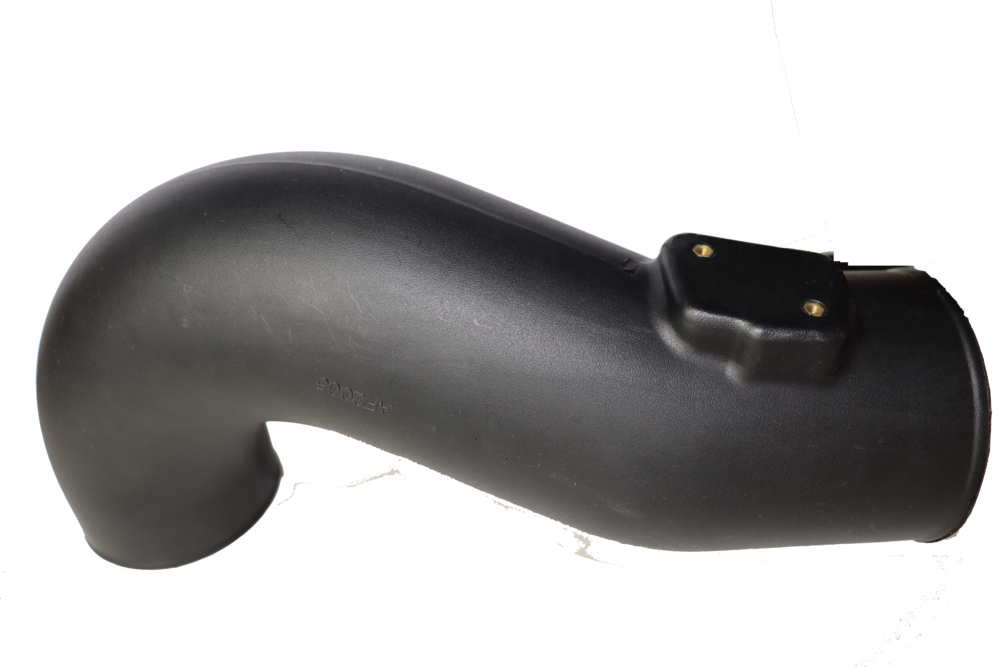
Hot stamping is widely used across industries that require durable markings and consistent appearance , including automotive, electronics, medical devices, industrial components, and consumer products.
From an application standpoint, hot stamping serves two main purposes.
First, it provides aesthetic enhancement . Metallic logos, wood-grain patterns, high-contrast text, and decorative lines can be added to plastic parts without increasing part complexity. This helps injection molded components achieve a premium look without the cost of multi-material molding.
Second, hot stamping supports functional identification . Serial numbers, warning symbols, regulatory markings, and control labels can be permanently applied. Unlike printed inks or stickers, hot stamped markings resist abrasion, fading, and chemical exposure, making them suitable for long-term use.
One of the most important advantages of hot stamping is durability. Once properly bonded, hot stamped graphics resist scratching, peeling, and fading during normal product use. This makes the process suitable for parts that are frequently handled or exposed to friction.
Although no surface treatment is completely permanent, hot stamping offers significantly longer service life compared to conventional printing methods.
Hot stamping delivers sharp edges, uniform color density, and precise detail reproduction. Metallic and matte finishes can be applied consistently across large production batches, helping manufacturers maintain stable visual quality.
This consistency is especially important for branded components, where logo clarity and color accuracy directly affect brand perception.
From a manufacturing standpoint, hot stamping is highly cost-effective once tooling is established. Cycle times are short, consumables are minimal, and labor requirements are low. Compared with painting or coating, hot stamping generates less waste and avoids the need for solvents.
For medium to high production volumes, the cost per part remains competitive while maintaining high quality.
Because hot stamping does not rely on liquid coatings or solvents, it produces fewer emissions and less material waste. This makes it an environmentally responsible alternative for manufacturers seeking cleaner production processes.
To achieve stable and repeatable results, hot stamping must be planned at both the part design stage and the process control stage .
Hot stamping works best with thermoplastics that soften gradually under heat, such as ABS, PC, PS, and certain blends. These materials allow reliable bonding of the foil adhesive layer.
Before production, it is essential to confirm that the selected plastic material is compatible with the chosen foil type and stamping temperature.
From a mold design perspective, surface quality directly affects hot stamping results. Smooth, uniform surfaces promote even foil transfer, while sharp edges, deep textures, or uneven wall thickness may cause incomplete bonding.
Designers should also consider flat or gently curved stamping areas whenever possible. Complex geometries may require customized dies or multiple stamping steps.
Stable hot stamping depends on precise control of:
Die temperature
Pressing force
Dwell time
Alignment accuracy
Excessive heat may deform the plastic part, while insufficient heat or pressure can lead to poor adhesion. For consistent results, parameters must be validated through testing before mass production.
In modern manufacturing, hot stamping is often integrated as part of a complete secondary processing workflow following injection molding. This integration helps maintain production efficiency while ensuring quality control.
Before stamping, parts should be cleaned to remove mold release agents, dust, or oils. In some cases, surface pre-treatment may be applied to improve adhesion.
By coordinating injection molding and hot stamping under one manufacturing partner, dimensional accuracy, appearance quality, and production scheduling can be better controlled.
In competitive markets, product differentiation matters. Hot stamping allows manufacturers to add visual value without changing part structure or increasing mold complexity.
Metallic finishes, crisp logos, and precise markings enhance perceived quality and help products stand out. For B2B components, durable identification markings also improve traceability and compliance.
As a result, hot stamping supports both branding goals and functional requirements , making it a valuable tool for product positioning.
Successful hot stamping on injection molded plastic requires more than just stamping equipment. It depends on proper material selection, mold design, injection molding control, and secondary processing expertise .
AAA MOULD provides integrated services covering plastic injection mold manufacturing, injection molding, and secondary processing such as hot stamping, screen printing, pad printing, ultrasonic processing, and assembly. By managing these processes under one roof, AAA MOULD helps customers achieve consistent quality, shorter lead times, and reliable results.
If you are developing plastic parts that require durable markings or premium surface finishes, AAA MOULD is ready to support your project from mold design to final decoration.
Contact AAA MOULD
today to discuss a customized solution for your injection molded plastic components.

RM1223, 12F, No.1, Fuji Bldg, No. 6018 Longgang RD. , Longgang Dist., Shenzhen,China.


Tel: 0086-755-89618186

Contact: Paul Hu 0086-18675501028





 LEAVE MESSAGE