Frequently Used Transparent Injection Molding Resins

Views: 29 Author: Site Editor Publish Time: Origin: Site
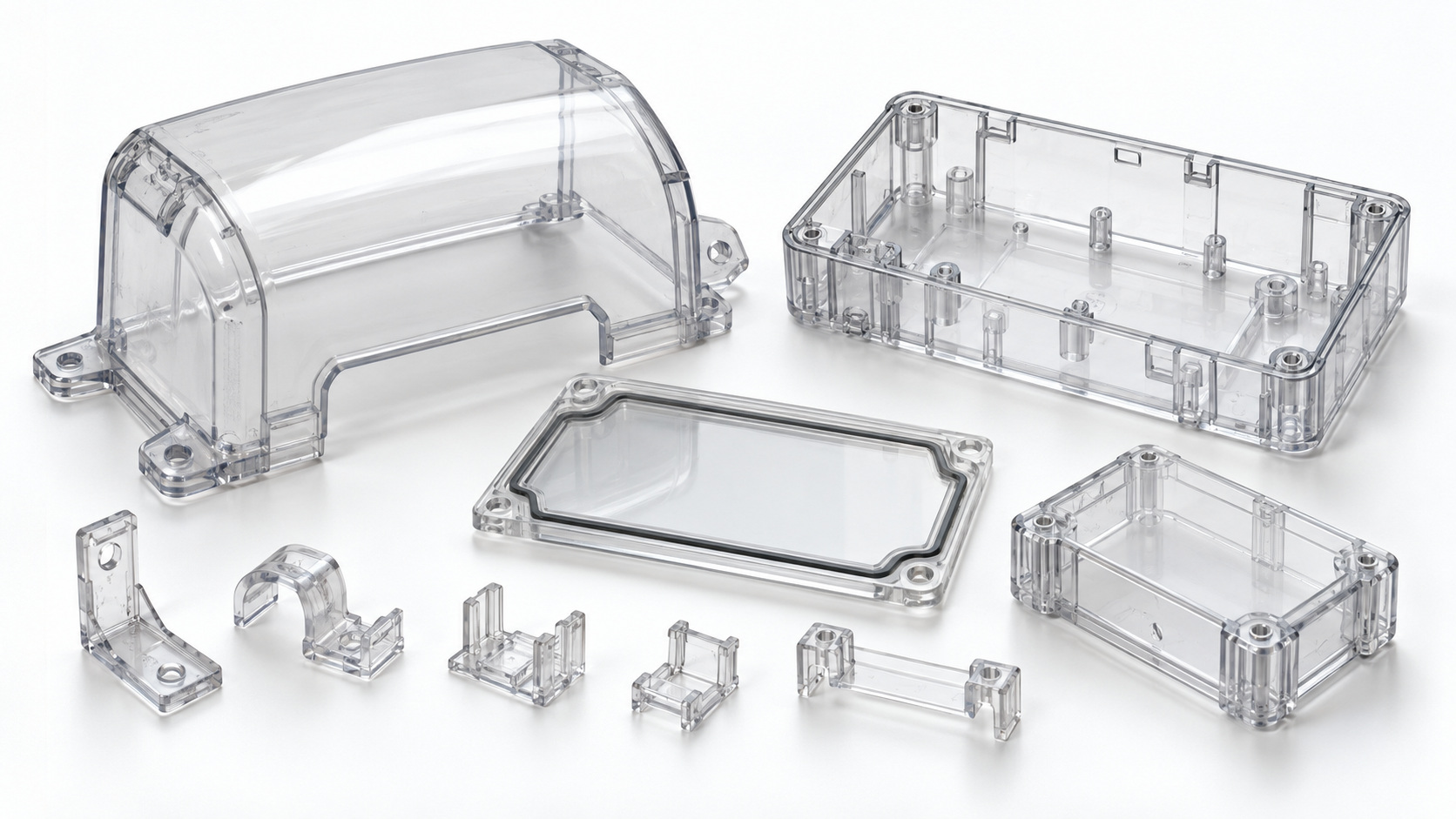
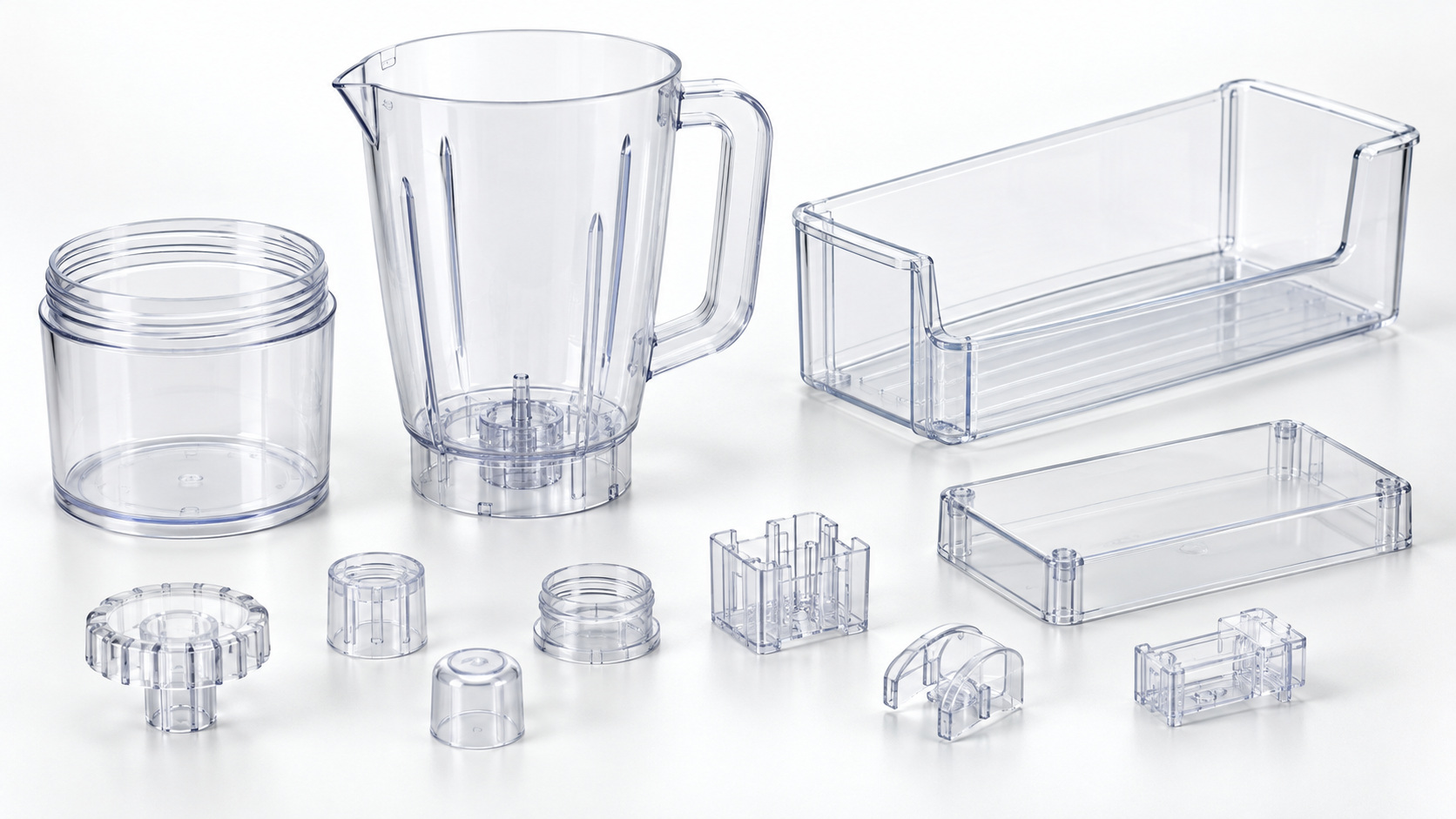
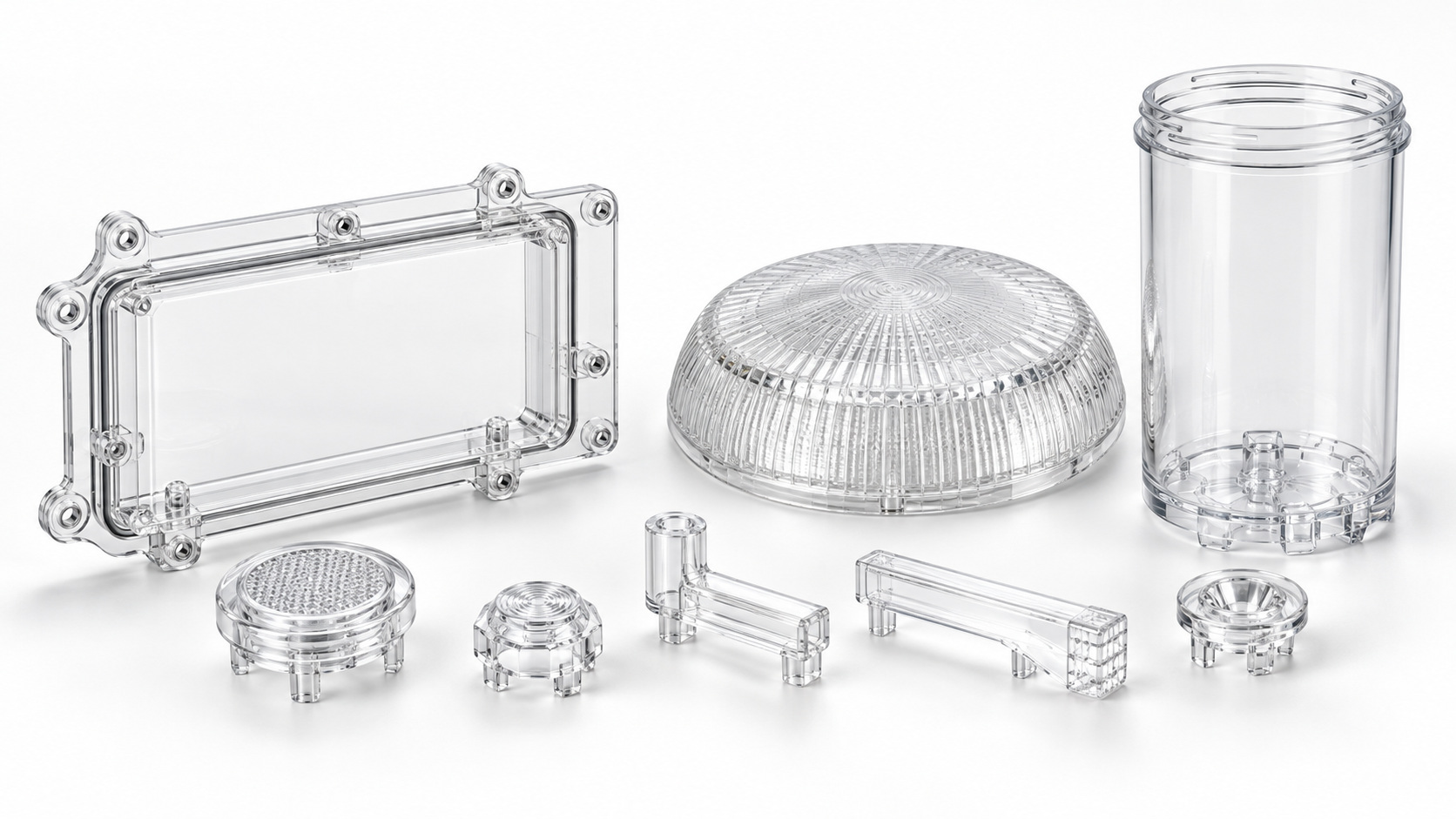
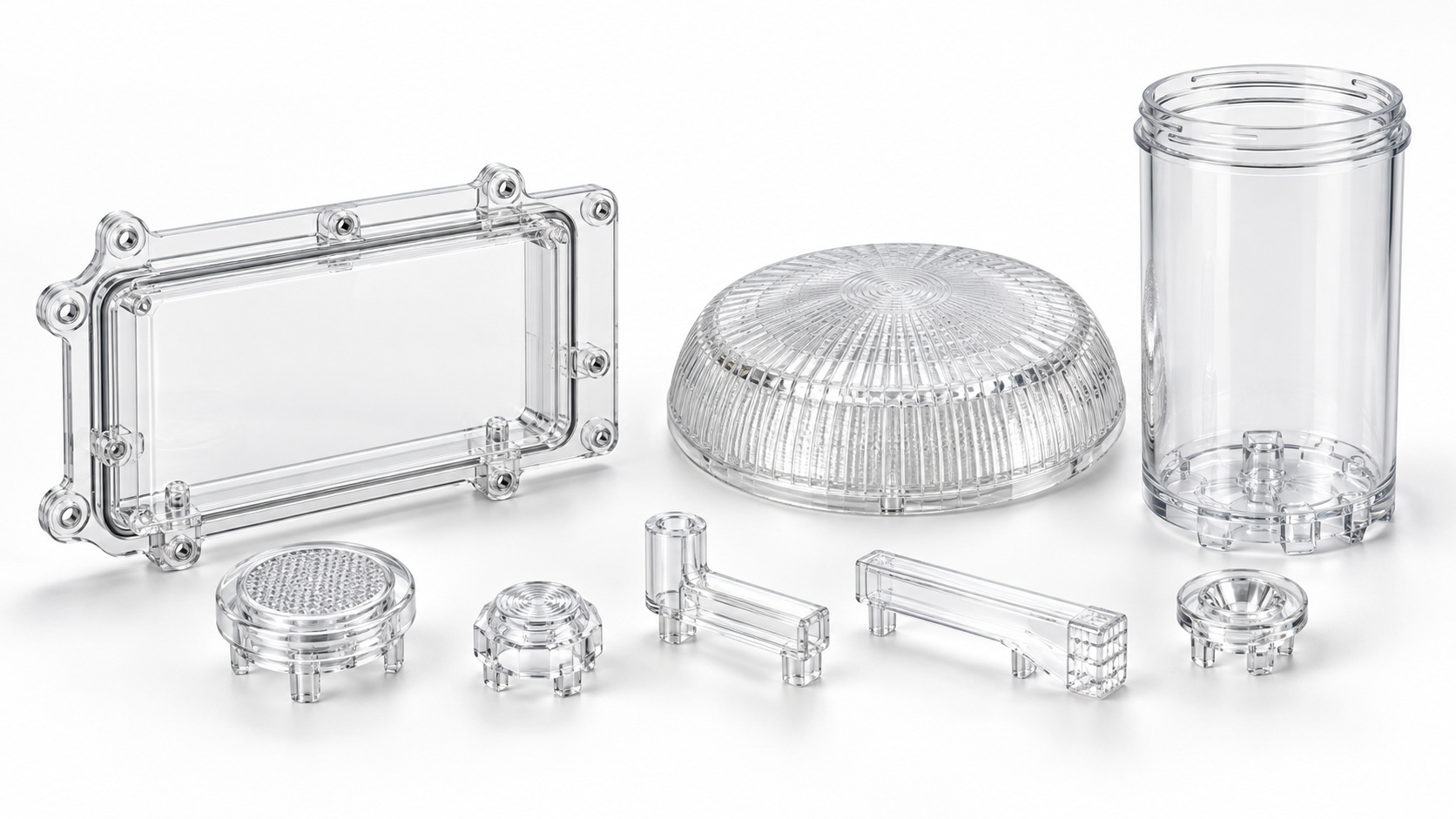
Transparent plastic parts feature light transmission, low weight, impact resistance and excellent moldability. They are widely adopted for optical lenses, lamp housings, instrument windows, electronic panels, packaging containers, medical accessories and other components. When developing transparent products, many clients only focus on light transmittance while overlooking thermal resistance, impact performance, stress cracking risk, processing complexity and cost differences. Improper material selection may lead to mass defects such as fogging, silver streaks, bubbles, stress whitening and cracking after assembly.
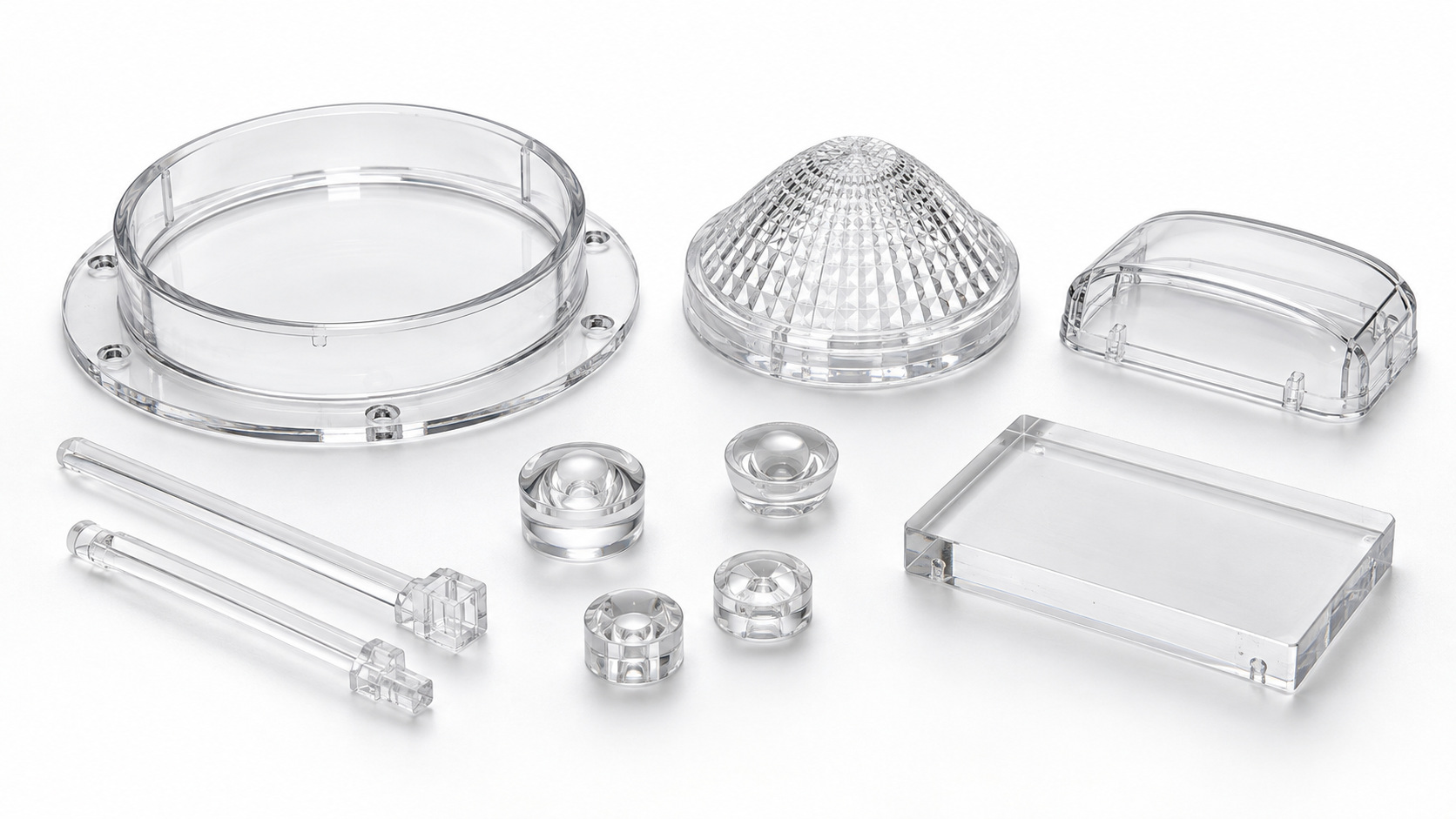
Combined with hands-on mass-production experience in injection molding, this article sorts out mainstream transparent injection molding materials, covering their properties, pros & cons, molding challenges and applicable scenarios. It helps product engineers and procurement teams quickly select suitable materials and avoid risks during mold trial and volume production.
 

1. PMMA (Acrylic, Polymethyl Methacrylate)

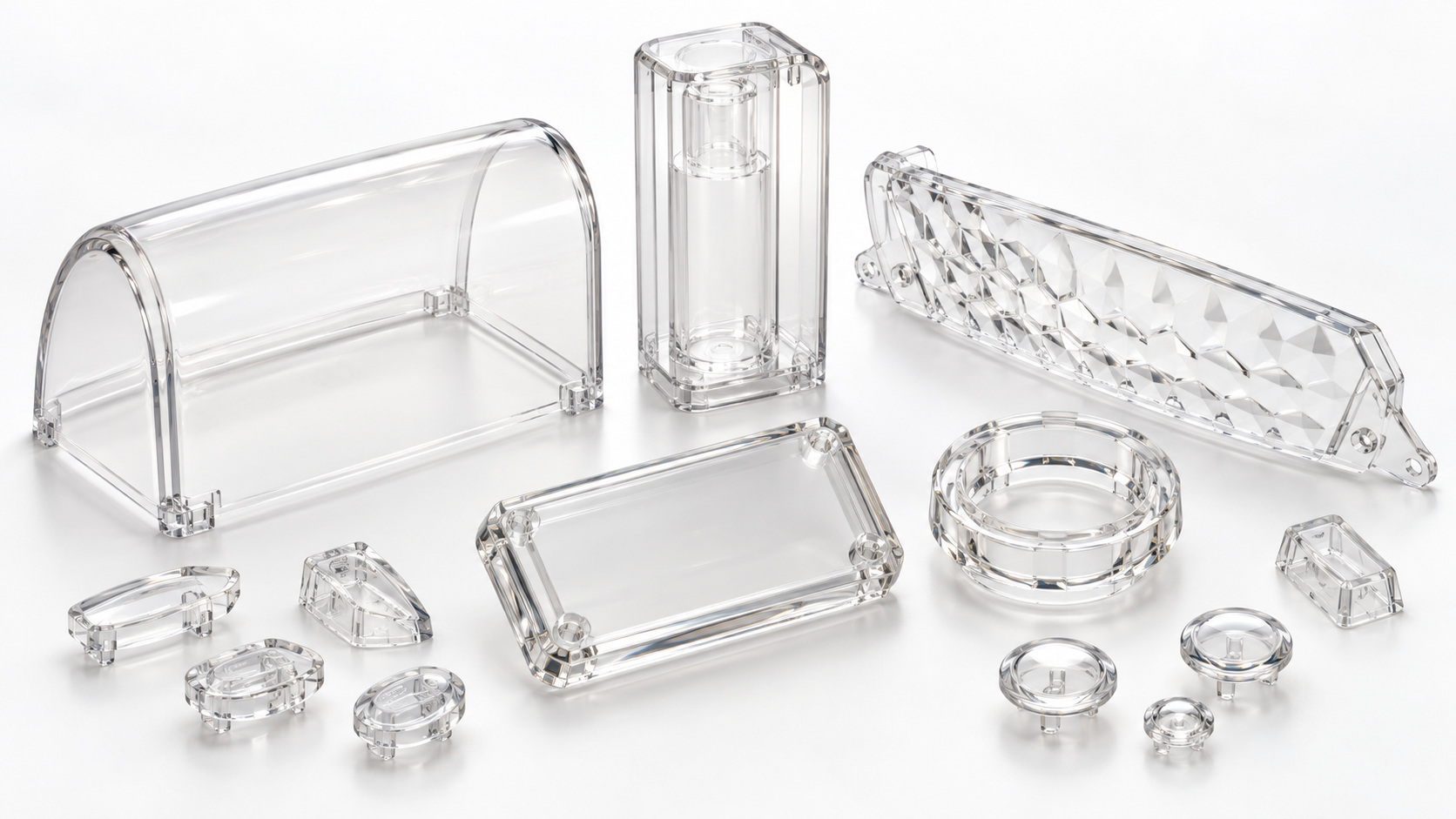
PMMA is a classic high-transparency resin with light transmittance over 92%, close to glass. It delivers outstanding surface gloss and superior weather resistance, resisting yellowing under long-term outdoor exposure.
  • Advantages: Excellent light transmission, high surface hardness, good printability and coating performance, moderate cost
  • Limitations: Brittle with poor impact resistance, prone to cracking under force; highly sensitive to molding stress, which may trigger cracking during assembly or after solvent contact; narrow molding temperature window
  • Molding notes: Sufficient pre-drying is required; adopt moderately elevated mold temperature and low-speed low-pressure filling to reduce shear stress. Locate gates away from cosmetic surfaces. Annealing after molding is recommended to release internal stress.
  • Typical applications: Lamp shades, decorative lenses, nameplates, display panels, optical decorative components

2. PC (Polycarbonate)

PC is a high-performance transparent engineering plastic balancing good clarity and exceptional impact resistance. Its toughness far outperforms PMMA, paired with reliable heat resistance and high continuous service temperature.
  • Advantages: High impact strength, shatter-resistant, stable heat performance, good dimensional accuracy; suitable for thin-wall high-strength transparent parts
  • Limitations: Low surface hardness and prone to scratching; limited chemical resistance, easy to develop stress cracks when exposed to certain cleaners or adhesives; highly susceptible to silver streaks and bubbles, requiring strict moisture control
  • Molding notes: High-temperature thorough drying is mandatory to control moisture content of raw pellets. Adjust injection speed to avoid overheating from melt shearing. Prioritize runner design and venting to prevent trapped gas and burn marks.
  • Typical applications: Face shields, equipment sight windows, LED lenses, charger housings, security lenses, automotive transparent trim parts

3. PET (Polyethylene Terephthalate)

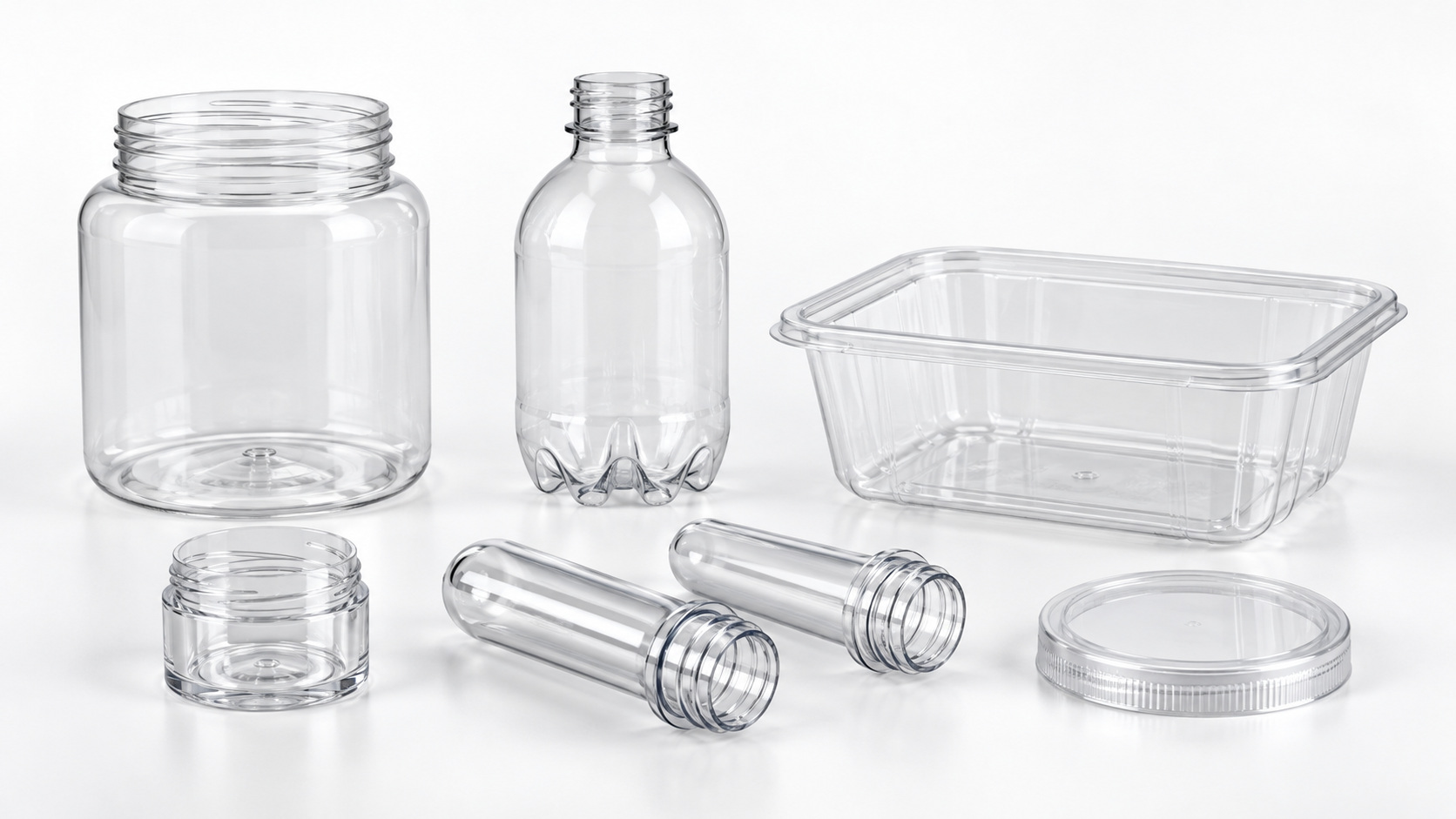
PET is widely known for beverage bottles. Injection-grade PET features controllable crystallization, good transparency, excellent barrier performance and recyclability.
  • Advantages: Decent clarity, good toughness, chemical resistance, outstanding water & gas barrier properties, cost-effective, compliant with food-contact standards
  • Limitations: Sensitive to crystallization; improper cooling will cause whitening and loss of transparency; narrow processing window demanding precise mold temperature control; prone to thermal degradation at high temperatures
  • Molding notes: Strict pre-drying required. Mold temperature must be precisely controlled with rapid cooling to suppress crystallization and maintain transparency. Not recommended for long-term high-temperature service.
  • Typical applications: Food containers, transparent packaging shells, cosmetic preforms, gift housings

4. PETG (Modified PET / Copolyester)

PETG is an amorphous copolyester specially developed for transparent molding. As an improved variant of PET, it has grown popular in recent years.
  • Advantages: High transparency, good toughness, low tendency for stress cracking; compatible with both injection molding and thermoforming, friendly to secondary hot bending processing; better chemical resistance than PC and less vulnerable to corrosion by cleaning agents
  • Limitations: Inferior heat resistance compared with PC, softens at elevated temperatures; higher unit price than standard PET
  • Molding notes: Less demanding drying requirements than PC, good flowability, fewer cosmetic defects, low stress risk, annealing is generally unnecessary
  • Typical applications: Cosmetic housings, premium display boxes, home appliance transparent panels, protective covers, gift packaging

5. SAN (AS, Styrene-Acrylonitrile Copolymer)

SAN (AS) is an economical rigid transparent resin with good clarity, high rigidity, stable dimensions and favorable flow properties for easy molding.
  • Advantages: Low cost, simple processing, high hardness, low deformation tendency, stable coloring performance
  • Limitations: Low toughness and poor impact resistance, brittle at low temperatures; mediocre weather resistance and prone to yellowing after long outdoor use
  • Molding notes: Dry raw material to remove moisture, control injection speed to minimize silver streaks. Not fit for impact-bearing or low-temperature environments.
  • Typical applications: Water cup liners, instrument sight windows, stationery, home appliance decorative transparent parts, general containers

6. Transparent PP (Random Copolymer Polypropylene)

Conventional PP is translucent or milky white, while random copolymer PP can achieve high clarity. It is lightweight, fatigue-resistant, acid & alkali resistant and available in food-grade grades.
  • Advantages: Low density and light weight, excellent chemical resistance, good toughness, shatter-resistant, low cost, microwave-safe
  • Limitations: Lower light transmittance than PC / PMMA / PETG; average surface gloss; limited heat resistance, easy to scratch
  • Molding notes: Good flowability and fast cooling speed. Nucleating agents can be added for higher transparency. Avoid excessive mold temperature.
  • Typical applications: Food storage containers, transparent drinking cups, disposable vessels, medical device components

7. Transparent TPU (Thermoplastic Polyurethane)

Different from rigid transparent resins above, transparent TPU is a flexible transparent elastomer.
  • Advantages: High clarity, elastic, abrasion and tear resistant, soft touch; compatible with hard plastic for two-shot overmolding
  • Limitations: Hygroscopic; prone to whitening after prolonged contact with grease or certain solvents; limited heat resistance
  • Molding notes: Adequate drying required; control barrel temperature to prevent yellowing from degradation. Venting is critical to avoid bubbles and weld lines.
  • Typical applications: Transparent protective sleeves, flexible hoses, transparent anti-slip overmolded parts, soft gaskets

8. Quick Material Selection Guide

  1. Priority for ultra-high clarity, decorative use and outdoor yellowing resistance → PMMA
  2. Transparent parts requiring impact resistance, high strength and heat tolerance → PC
  3. Good chemical resistance and low risk of cracking → PETG
  4. Food packaging with barrier requirements and moderate budget → PET
  5. Low-cost rigid transparent parts without impact load → SAN (AS)
  6. Lightweight food-grade parts with chemical resistance and drop resistance → Transparent random PP
  7. Transparent flexible parts or soft overmolding → Transparent TPU

9. General Challenges & Process Tips for Transparent Injection Molding

Transparent molded parts allow far less tolerance for cosmetic defects than standard black plastic components. Silver streaks, bubbles, weld lines, yellowing, fogging, scratches and stress marks are visible to naked eyes.
  • Pre-drying is critical: Excessive moisture in PC, PET, PETG and PMMA directly causes silver streaks and bubbles. Drying temperature and duration vary by material; parameters cannot be interchanged.
  • Prioritize mold venting: Trapped gas leads to burn marks, black specks and gas marks. Vents should be reserved at cavity ends and weld line positions.
  • Control shear stress: High injection speed and high holding pressure introduce internal stress, resulting in cracking and stress whitening later. Medium-low speed filling is preferred for cosmetic transparent surfaces.
  • Mold surface finishing: Mirror polishing is standard for transparent parts, and polishing grade directly determines light transmission and surface quality.
  • Prevent raw material contamination: Keep transparent pellets away from foreign plastics and dust. Thorough barrel purging is required to eliminate black spots and discoloration.

Conclusion

No single transparent resin works for all scenarios. Material selection balances optical requirements, impact strength, heat resistance, chemical resistance, budget and downstream processing. PMMA, PC and PETG are the three dominant transparent engineering resins for industrial use. SAN and transparent PP serve cost-sensitive and food-contact applications, while transparent TPU is selected for flexible transparent structures.
At the early product development stage, material performance verification via sample testing is recommended. Mold polishing, venting and drying plans should be assessed in advance to reduce rework risks during mold trials.
×

Inquire

*Name
*Email
Company Name
Tel
*Message